

 English
 Español
 عربى
عربى
FunctionFast dry and easy to care: Not easy to shrink, no ironing and anti-wrinkle, fast drying after machine washing.Durable and fade resistant: Strong wear resistance, high color fastness, long-term...
See DetailsWhy Choose Us?
Established in 2008, with a 3,000m² professional factory, over 50 employees, and 5 departmental managers.

Coming From China, Marketing To The World.
What Is a Tufted Quilt and How Does It Work?
Jul 15, 2026
Content
- 1 What Is a Tufted Quilt? A Direct Answer
- 2 How Tufting Creates Texture and Structure in a Quilt
- 3 Tufted Quilt Styles Shown Side by Side
- 4 Comparing Common Tufted Quilt Patterns
- 5 Why Soft Washed Microfiber Is Commonly Used for Tufted Bedding
- 6 Seasonal Layering With Tufted Bedding
- 7 Caring for a Tufted Quilt Set
- 8 Matching a Tufted Bedding Style to a Bedroom
- 9 About Nantong Noble International Trade Co., Ltd.
- 10 Frequently Asked Questions
What Is a Tufted Quilt? A Direct Answer
A tufted quilt is a bed covering in which thread or stitching is passed through the top fabric, the filling, and the backing at regular intervals, then secured to create small fixed points across the surface. In direct terms, a Tufted Quilt uses this stitching technique to lock the filling in place, producing a textured, dimensional pattern rather than a flat, smooth surface. A well-made Luxury Tufted Quilt Set relies on this same principle, applied with tighter stitch spacing and finer fabric, to give the quilt both its distinctive look and its practical durability.
The core purpose of tufting is functional before it is decorative. According to general textile industry references on mattress and bedding tufting, this technique is used to keep loose filling from shifting or bunching over repeated use, which is why tufted constructions are commonly associated with higher-quality bedding. The remainder of this article explains how tufting is applied to quilts specifically, compares common tufted patterns, and outlines practical guidance for selecting and caring for tufted bedding.
How Tufting Creates Texture and Structure in a Quilt
A quilt is built from three basic layers: a decorative top fabric, a filling layer that provides loft and warmth, and a backing fabric. Without any method of securing these layers together, the filling can migrate toward the edges or corners over time, leaving thin, uneven patches in the middle. Tufting solves this by running thread through all three layers at set intervals and fastening it, which pins the filling in place at each tuft point and creates the raised, dimensional surface associated with a Tufted Quilt.
The diagram below is an isometric, labeled illustration of this layered construction, showing where the tuft points sit relative to the fabric layers.
In this layered view, each tuft point functions as a small anchor running through the top fabric, the filling, and the backing, holding the three layers together at that spot. The spacing and pattern of these tuft points is what defines the visual style of the finished piece, whether it forms a diamond grid, a straight channel line, or another repeating shape. A closer, more consistent tuft spacing generally corresponds to a more even distribution of filling and a more defined surface texture, which is one reason stitch density is worth noticing when comparing bedding. This same principle underlies both a Classic Diamond Tufted Quilt Set – Soft Washed Microfiber Bedding for Year-Round Comfort and a Striped Tufted Quilt Set – Soft Washed Microfiber Bedding with Boho Textured Design, since both rely on tufting to hold their respective pattern in place.
Tufted Quilt Styles Shown Side by Side
The photograph below shows three finished styles produced using this tufting method: a Luxury Tufted Quilt Set in a soft pink tone, a set from the Tufter Bedding Sets Elegant Soft Luxury line in white, and a set from the Tufter Bedding Sets Plush Cozy Elegance line in a light grey diamond pattern.
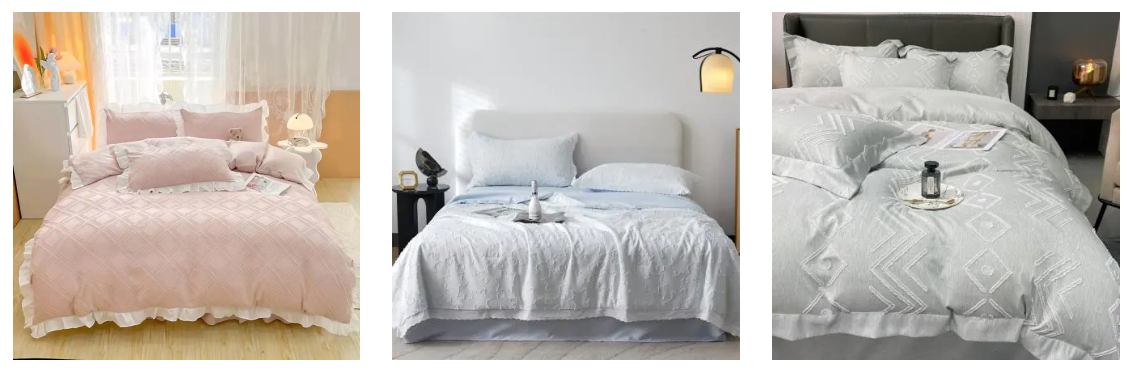 The pink set on the left demonstrates a raised diamond tuft pattern across the top of the quilt, keeping the filling evenly distributed and giving the surface a rounded, cushioned look. The white set in the center reflects a more subtle, closely spaced tuft grid, which is typical of an Elegant Soft Luxury presentation intended for a softer, muted appearance. The grey set on the right shows a bolder, wider diamond pattern, closer to what is described as a Plush Cozy Elegance finish, where the tuft spacing is set slightly further apart to emphasize dimension and depth in the fabric.
Comparing Common Tufted Quilt Patterns
Tufted quilts are generally produced in a small number of recognizable patterns, and understanding the difference helps match a set to a bedroom's existing style. A Classic Diamond Tufted Quilt Set – Soft Washed Microfiber Bedding for Year-Round Comfort uses tuft points arranged on a diagonal grid, producing a repeating diamond shape across the surface. A Striped Tufted Quilt Set – Soft Washed Microfiber Bedding with Boho Textured Design instead arranges tuft points in parallel lines, producing a channel or striped effect that reads as more casual and textured.
| Pattern | Visual Effect | Typical Setting |
|---|---|---|
| Classic diamond tuft | Even, symmetrical grid | Traditional or classic bedrooms |
| Striped or channel tuft | Linear, textured lines | Boho or casual bedrooms |
| Soft layer tuft | Subtle, closely spaced texture | Minimalist or neutral bedrooms |
Neither pattern is inherently superior; the decision generally comes down to the overall look a bedroom is aiming for. A Stylish Tufter Bedding Sets Soft Layer approach, for example, favors a subtler texture that blends into a neutral room rather than standing out as a strong visual feature.
Why Soft Washed Microfiber Is Commonly Used for Tufted Bedding
Microfiber is a common fabric choice for tufted quilts because its fine fiber structure takes dye and finishing treatments evenly, which supports the kind of consistent surface needed for a defined tuft pattern to read clearly. A soft washing treatment applied during finishing softens the fabric hand-feel before the quilt reaches the customer, which is why product names such as Striped Tufted Quilt Set – Soft Washed Microfiber Bedding with Boho Textured Design specifically reference this finishing step. This washing process also tends to reduce initial shrinkage, since much of the fabric's natural shrinkage has already occurred during the wash-finishing stage rather than after the first home laundering.
The chart below is a donut chart illustrating, in general terms, the relative contribution of fabric choice, tuft density, and filling weight to the overall feel of a finished tufted quilt.
Fabric finish generally represents the largest single factor in how a quilt feels against the skin on first contact, since this is what the hand physically touches. Tuft density and pattern come next, since closer stitch spacing changes both the visual texture and the way the quilt drapes over the body. Filling weight and loft round out the picture, contributing to warmth and overall thickness, though this factor tends to matter more for seasonal comfort than for immediate tactile impression. Recognizing that all three elements interact is useful when comparing a Luxury Tufted Quilt Set against other tufted options, since a heavier filling with sparse tufting can feel very different from a lighter filling with dense tufting even at a similar overall weight.
Seasonal Layering With Tufted Bedding
Because a tufted quilt is generally lighter than a heavily filled comforter, it lends itself well to layering across seasons rather than being used as the sole bedding piece year-round. The stacked bar chart below illustrates, in general terms, how a tufted quilt might be combined with other bedding layers across three broad seasonal groupings.
During warmer months, a tufted quilt on its own is often sufficient, since its textured construction still allows some airflow compared to a solid, heavily filled comforter. In transitional weather, an additional lightweight blanket layer underneath extends the useful range of the same quilt without requiring a separate heavier bedding set. In colder months, that additional layer typically increases in thickness, while the tufted quilt continues to serve as the visible top layer that defines the bed's appearance. This layering approach is one practical reason a Tufter Bedding Sets Elegant Soft Luxury set can remain in use across most of the year rather than being swapped out seasonally.
Caring for a Tufted Quilt Set
Proper care helps a tufted quilt maintain both its pattern definition and its softness over repeated washing. The following general guidance applies broadly to soft washed microfiber tufted bedding.
- Wash in cool or warm water rather than hot, since high heat can affect microfiber softness over time.
- Use a gentle or normal cycle to reduce mechanical stress on the tuft stitching.
- Avoid overloading the washing machine, which can pull unevenly on the tuft points.
- Tumble dry on a low setting, or air dry, to help the filling settle back evenly after washing.
- Fluff and reshape the quilt after drying to help the tuft pattern regain its full dimension.
Following a consistent care routine generally helps a Tufted Quilt keep its texture and appearance well beyond the first several wash cycles.
Matching a Tufted Bedding Style to a Bedroom
The radar chart below compares four tufted bedding style categories across three general characteristics: visual boldness, textural depth, and versatility across different room styles.
Diamond and striped tuft patterns generally score higher on visual boldness and textural depth, since their defined lines and grids create a more noticeable surface pattern from across the room. A soft layer tuft option scores higher on neutral fit and everyday comfort, since its subtler texture blends more easily into a wider range of existing room palettes. Versatility sits somewhere in between for most styles, reflecting the fact that tufted bedding in general tends to suit a fairly broad range of bedroom settings compared to more heavily patterned printed bedding. This kind of comparison can help when deciding between a bolder Classic Diamond Tufted Quilt Set and a quieter Stylish Tufter Bedding Sets Soft Layer option for a particular room.
About Nantong Noble International Trade Co., Ltd.
Nantong Noble International Trade Co., Ltd. is a comprehensive home textile enterprise specializing in the design, production, processing, and packaging of household textiles. With over 18 years of experience in international trade and home textile manufacturing, the company is committed to providing customers with professional home textile solutions.
As a professional China home textile manufacturer and home textile factory, the product range encompasses bedding sets, bedspreads, quilts, blankets, and sofa covers, including tufted quilt styles such as those shown above. The company is constantly updating product styles and designs to ensure rapid production, and it provides customized products based on customer demands to meet the diverse needs of the market.
Frequently Asked Questions
Q1: What makes a quilt a tufted quilt?
A tufted quilt has thread or stitching passed through its top fabric, filling, and backing at set intervals, which secures the filling in place and creates a raised, textured surface pattern.
Q2: Is a diamond tufted quilt warmer than a striped tufted quilt?
Warmth is driven mainly by the filling weight rather than the tuft pattern itself, so a diamond and a striped tufted quilt with the same filling weight generally offer a similar level of warmth.
Q3: How should a soft washed microfiber tufted quilt be washed?
Cool or warm water on a gentle cycle, followed by low-heat tumble drying or air drying, generally helps preserve both the microfiber softness and the tuft pattern definition.
Q4: Can a tufted quilt be used year-round?
Yes, a tufted quilt can generally be layered with an additional blanket in colder months and used on its own in warmer months, making it a flexible year-round bedding piece.
Q5: What is the difference between a diamond tuft and a soft layer tuft pattern?
A diamond tuft uses a diagonal grid of tuft points to create a defined repeating shape, while a soft layer tuft uses closer, subtler stitching for a quieter, less prominent texture.
Related products
-
-
FunctionFast drying and easy to take care of: Anti-shrinkage and no ironing, fast drying after machine washing, simplified daily care.Durable color protection: High wear resistance and color fastness,...
See Details -
FunctionStrong warmth: High gram weight provides good insulation performance, suitable for low-temperature environments.Durable anti-wrinkle: High-density structure wear and tear resistance, not easy ...
See Details -
FunctionSkin-friendly breathable: Natural cotton fiber is soft and comfortable, good for breath, and suitable for the use of moisture.Absorption and perspiration: Good moisture absorption, keep dry bo...
See Details -
FunctionMore delicate and skin-friendly: Higher than 12868,13372, the fabric is more delicate and soft, the touch is better and more.Breathable: High-density cotton structure further improves moisture...
See Details -
Function Extreme skin affinity: Day silk fiber is soft and smooth, touch like silk, suitable for close-fitting use of moisture. Absorption and breathability: moisture absorption and sweat performance,...
See Details -
FunctionMore delicate and skin-friendly: Compared with 50S, 60S silk fiber is thinner, softer, smoother, more comfortable for close use, and more moisture absorption.Breathable: Higher branches improv...
See Details -
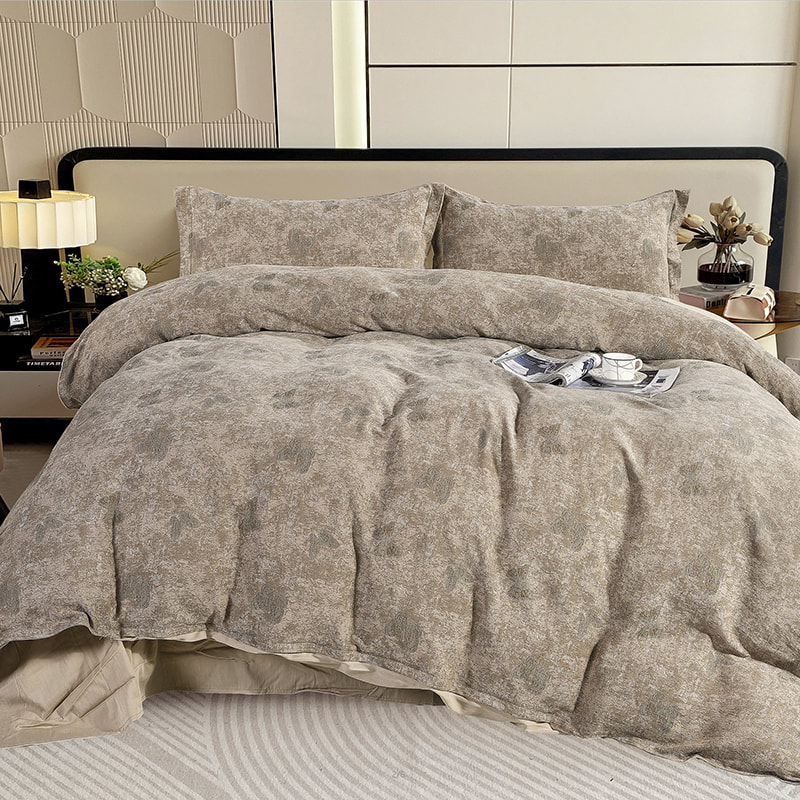
Function Luxury touch: The fiber is soft and smooth, and the jacquard process adds a three-dimensional texture. Touch like silk moisture absorption: moisture absorption performance keeps dry and comfo...
See Details -
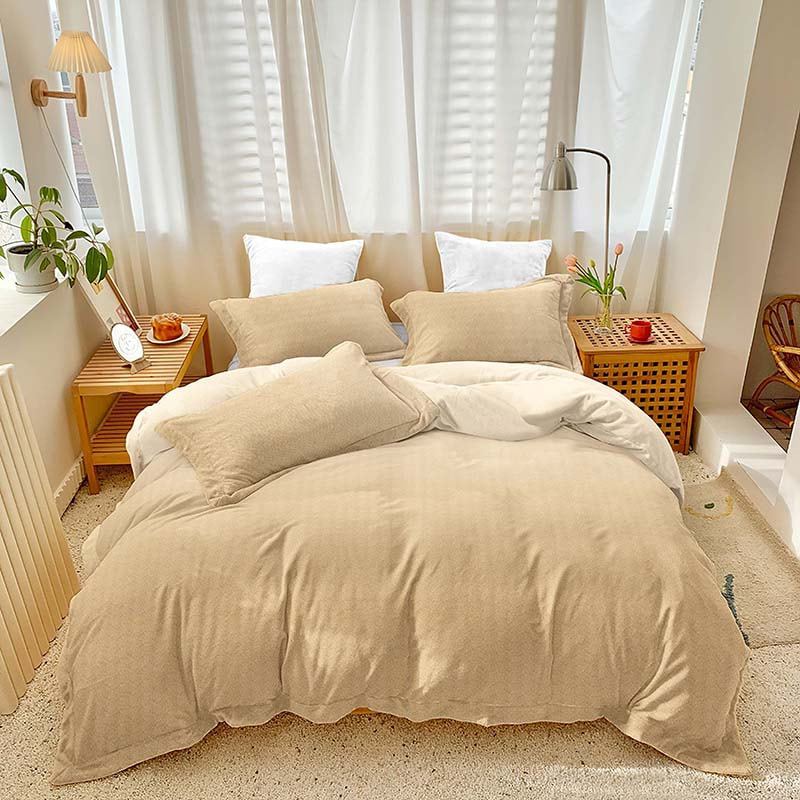
Function Fine pattern performance: Digital printing is higher precision than round net printing, richer color, more delicate pattern, fast dry.Easy to care: The polyester fiber characteristics are unc...
See Details -
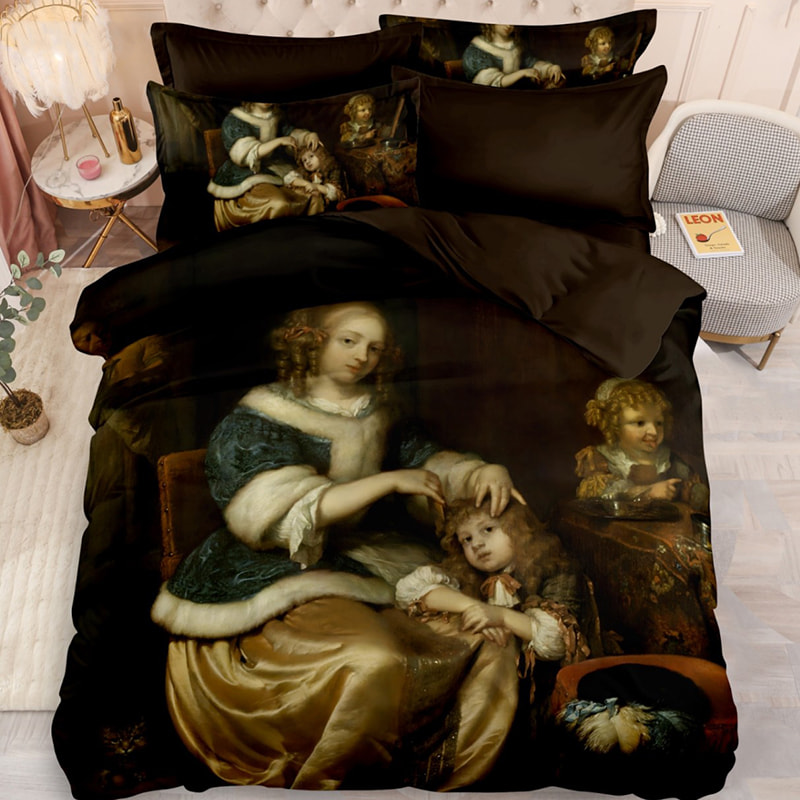
FunctionFine pattern performance: Digital printing is higher precision than round net printing, richer color, more delicate.Durable anti-wrinkle: 130g polyester fiber fabric has a vertical feeling, an...
See Details -
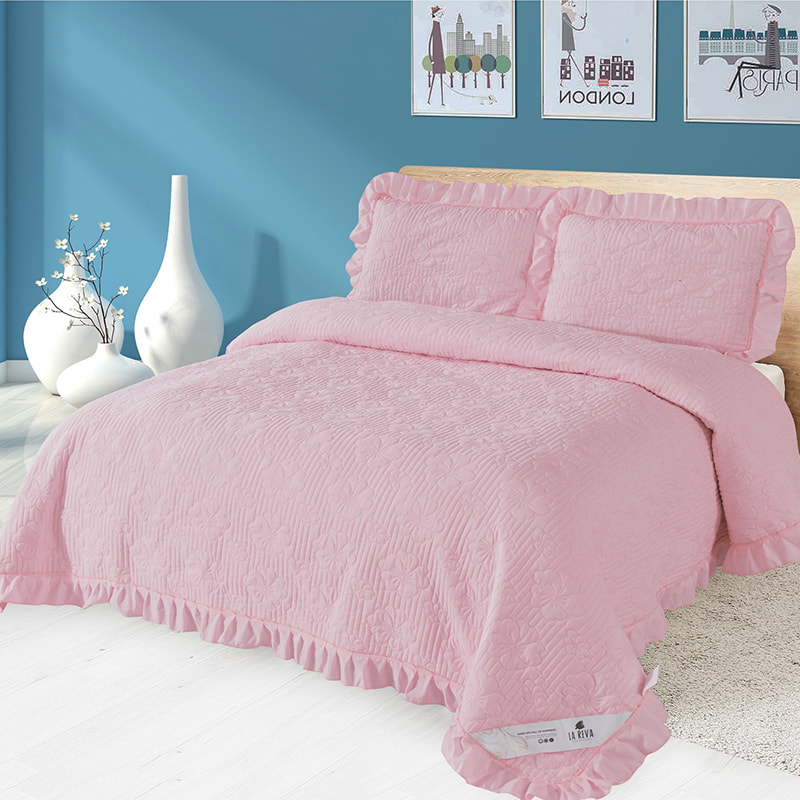
FunctionThin and light: The ultrasonic process does not create pinholes or quilting thread, and the fabric is thin and smooth.Strong decoration: Lace elements add an elegant and romantic sense, enhanc...
See Details -
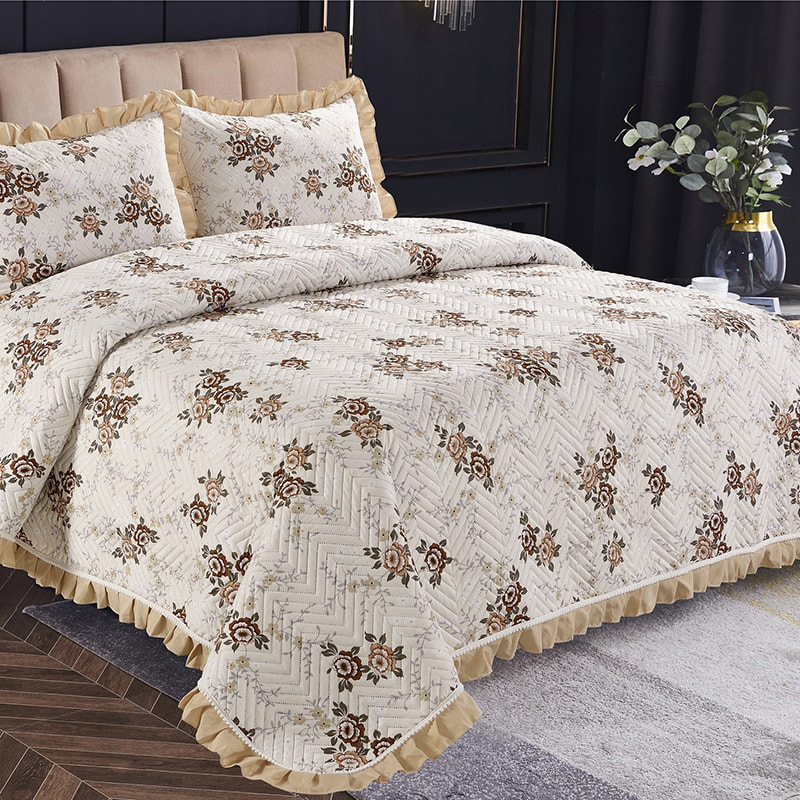
FunctionThin and light: The ultrasonic process does not create a pinhole or quilting thread, and the fabric is thin and smooth.Strong decorative: Print patterns add a sense of art and design, enhancin...
See Details
